
Executive Courses
Upskilling Your Workforce through TDSI’s Executive Courses
TDSI’s Executive Courses under its Continuing Education arm look at domain-specific disciplines in systems thinking and systems engineering, as well as any in-trend/ emerging technologies, to upskill the Singapore defence workforce in line with the nation’s advocacy for lifelong learning. Embracing the digital transformation landscape today, participants will benefit from these courses, learning from subject matter experts from the defence technology community and/or academic institutions, on valuable topical knowledge and skillsets to manage real-world applications. This allows course participants to strengthen their capabilities and value-add to their employing organisations.
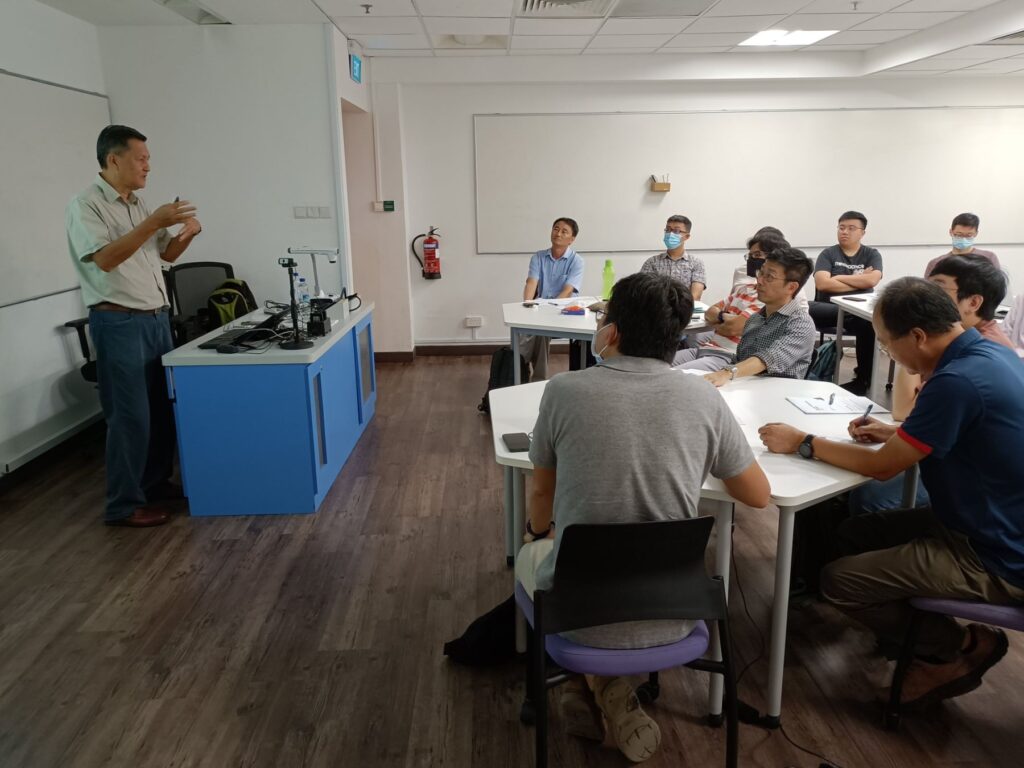
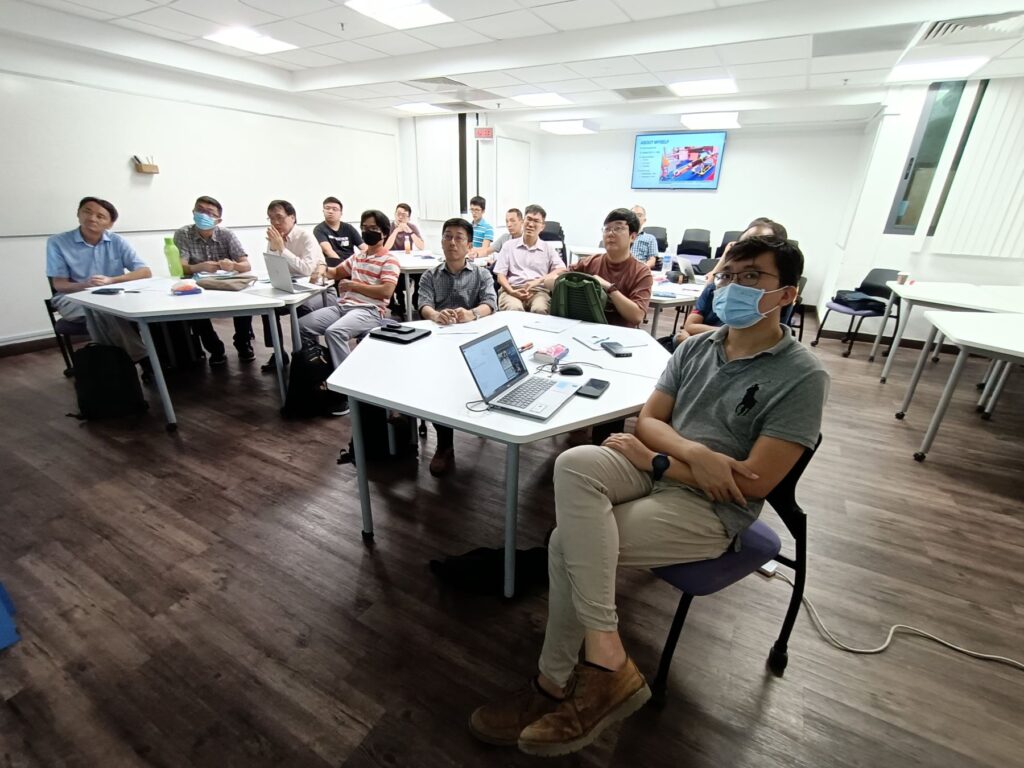
TDSI’s Executive Course “Military Navigation Systems Workshop” for Singapore’s Defence Technology Sector
Given the critical importance of navigation in modern military systems and operations that leverages on smart technologies, access to reliable navigation data is imperative while denying them to adversaries during military operations. The executive course on “Military Navigation Systems Workshop” aims to highlight the vulnerabilities in military navigation systems under different deployment scenarios, and share potential corresponding counter-measures. Participants from the defence technology community were appreciative of the knowledge gained from the workshop and acknowledged that the learning was highly relevant and impactful to their current field jobs/ projects. This workshop is well-recognised by the Professional Engineers Board and qualified for 6 Professional Development Units.
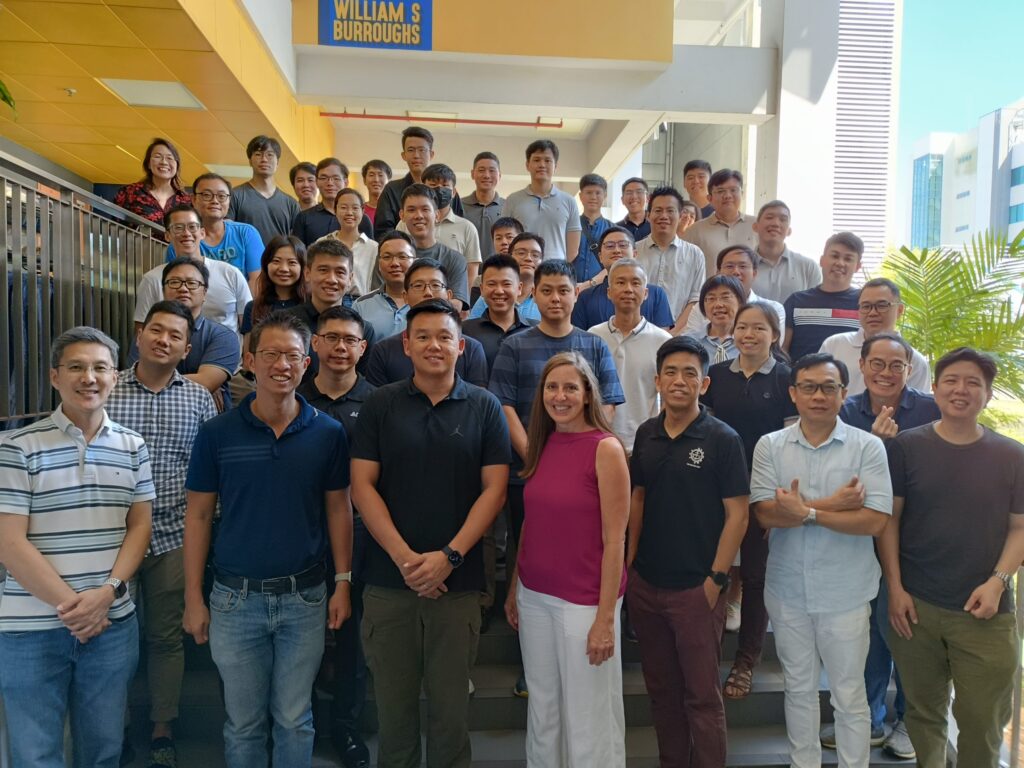
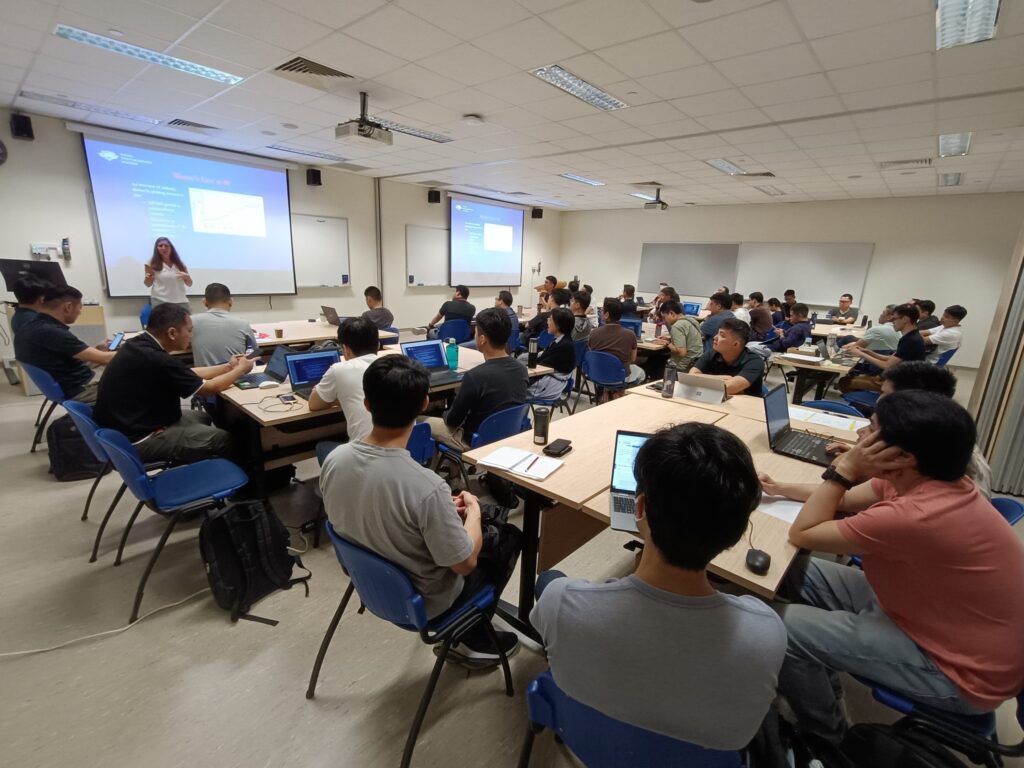
TDSI’s Executive Course “Systems Engineering and Analysis of Emerging Advanced Technologies for Defence Applications”
It is important for the Singapore defence forces to be at the frontier and be knowledgeable about emerging technologies for defence applications. The executive course on “Systems Engineering and Analysis of Emerging Advanced Technologies for Defence Applications” aims to present concepts and methods for engineering and analysing emerging advanced technologies, that include artificial intelligence and directed energy weapons, for defence applications. Course participants from the defence technology community have learnt and gained insights from the course that introduced concepts in complexity theory, strategic thinking, technology assessment, systems engineering and systems analysis. Course participants were appreciative that the learning gained have value-added to their current work with their primary affiliated organisations in the defence eco-system.
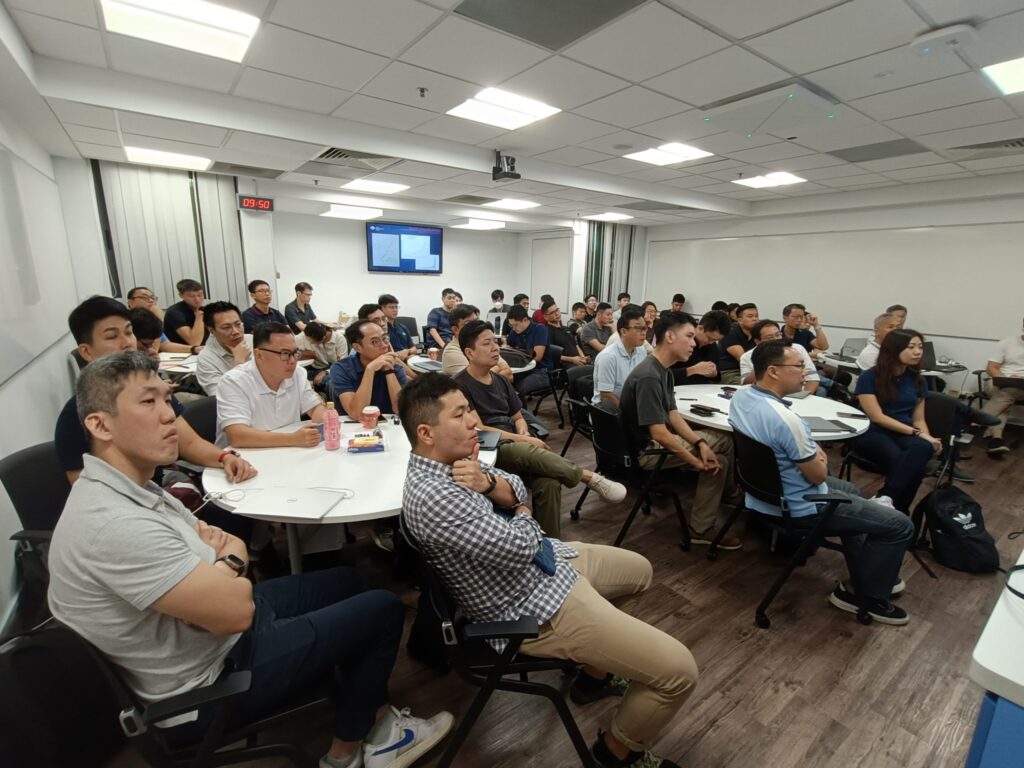
TDSI’s Executive Course “Generative Artificial Intelligence”
Artificial Intelligence (AI) technologies have been widely adopted in operations and work processes/ systems at the national level and in various industries. Generative AI is the latest cutting-edge technology that has been launched to extreme popularity, with progressive adoption by enterprises and industries because of its capabilities that can boost productivity and value-add decision-making, alongside many other deployment opportunities. Recognising the increasing importance of Generative AI for the defence sector, TDSI organised the executive course on this in-trend technology for the Singapore defence technology community to equip them with the fundamental knowledge of key concepts and applications of Generative AI, included algorithms such as generative adversarial networks (GANs) and variational autoencoders (VAEs). Course participants learnt how Generative AI could enhance military operations, from synthetic training data generation to scenario planning and decision support systems. This course is well-recognised by the Professional Engineers Board and qualified for 12 Professional Development Units.
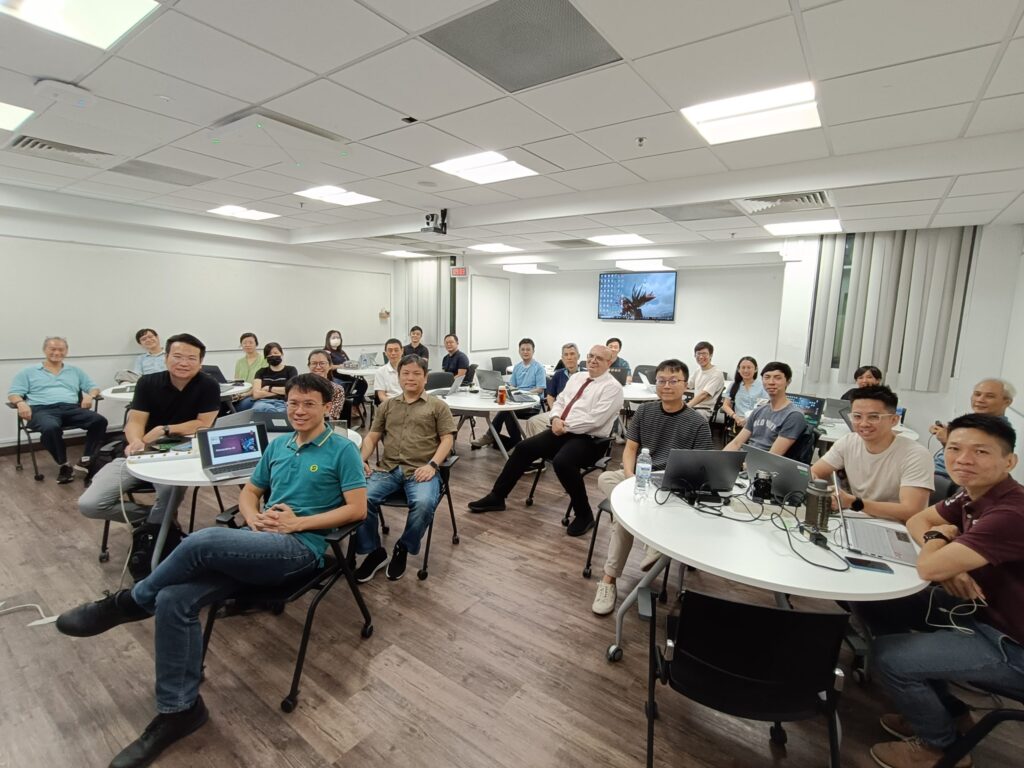
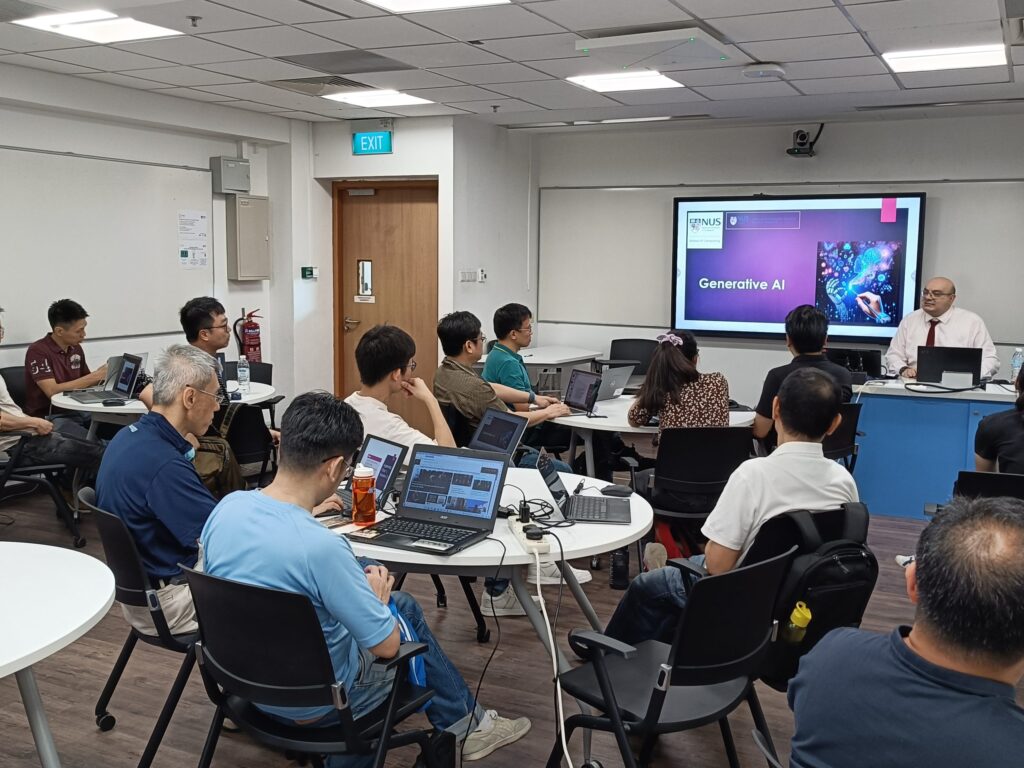
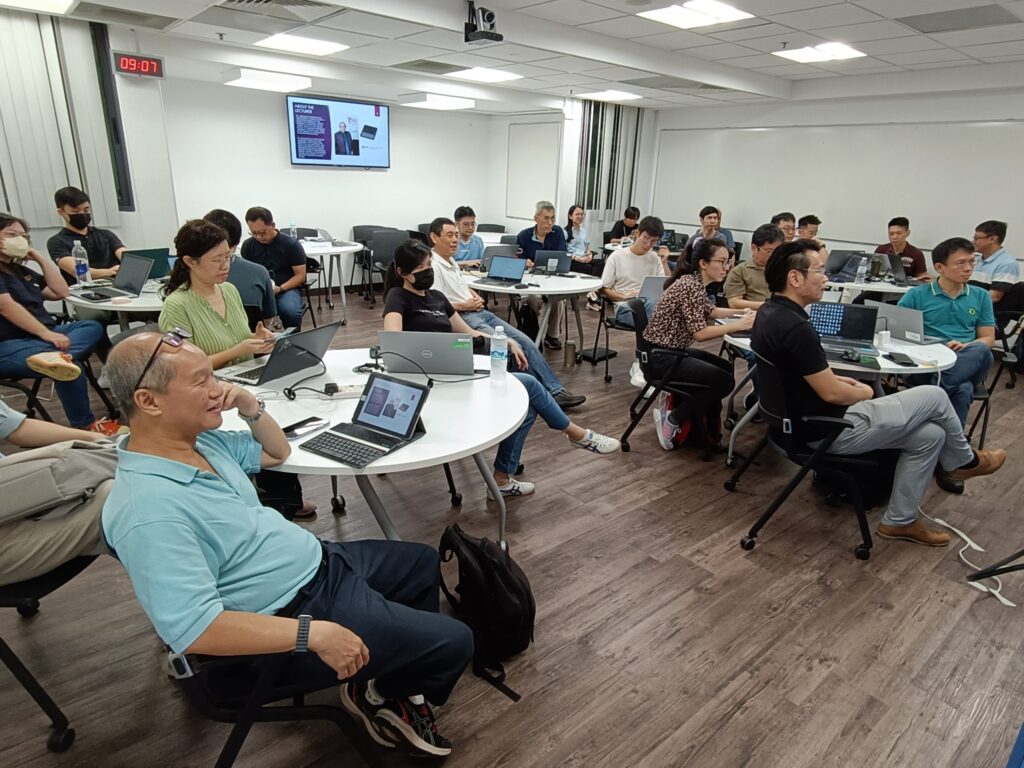
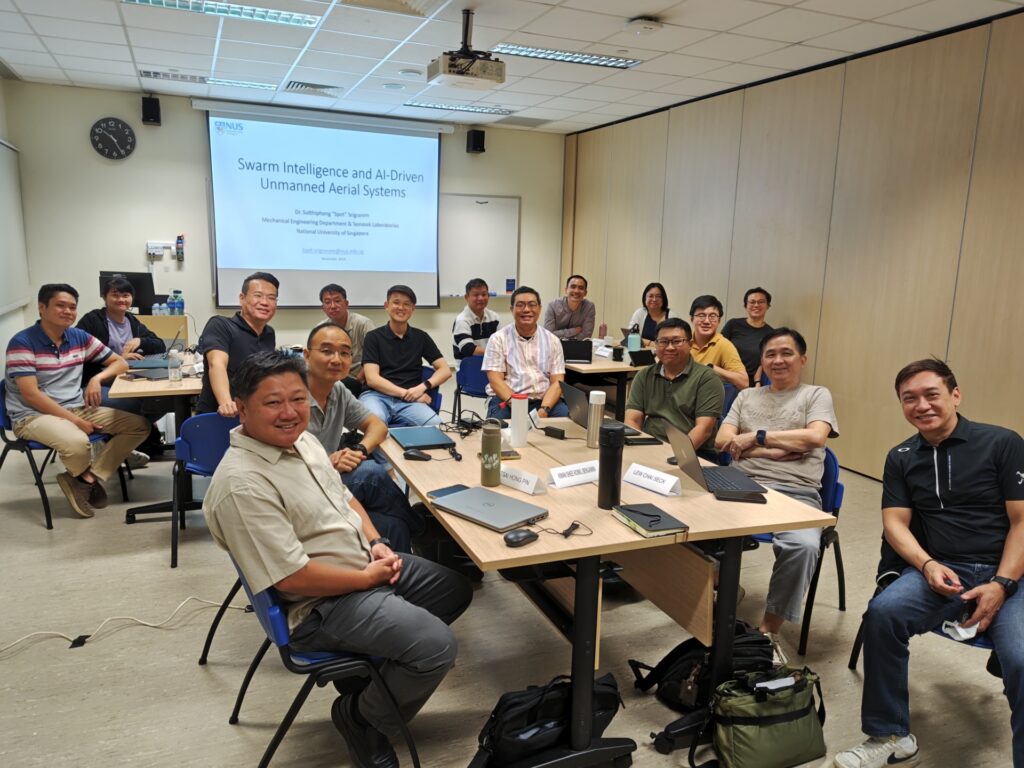
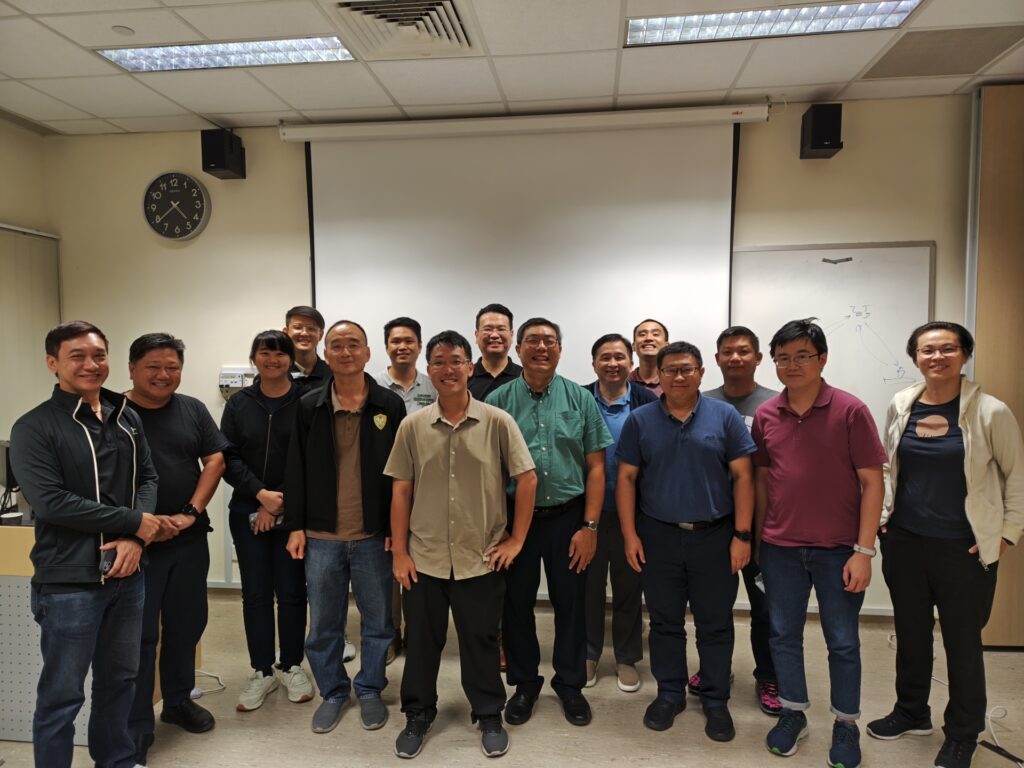
TDSI’s Executive Course “Swarm Intelligence and AI-Driven Unmanned Aerial Systems”
Swarm intelligence has become increasingly important for the defence community to learn as the technology is reshaping how autonomous systems operate in complex and contested environments. It is strategically important for the defence professionals to understand swarm intelligence technology to gain operational advantage, and with technology readiness, to ensure resilience and shape the future of warfare. Swarm intelligence is also a dual-use technology that could be applied from search-and-rescue and disaster response to maritime surveillance, making it essential for multi-domain operations. This 3-day intermediate-level course of TDSI focused on the fundamental and advanced concepts of multi-agent autonomous systems in the context of aerial swarms, specifically on the latest state-of-the art and practical applications. The course also provided a comprehensive overview of robotics and multi-agent systems, swarm formation, communications, task scheduling and allocations, swarm operations, as well as applications for heterogeneous systems and an introduction to game theory.

High-Dimensional Multi-Agent Robot Learning
Overview
As robotic systems grow to be more capable and ubiquitous, their increasing scale and complexity necessitate a shift toward robust, scalable controllers and automated synthesis methods. My research group has approached this challenge by turning to distributed (multi-agent) reinforcement learning (MARL) approaches, with an emphasis on understanding and eliciting emergent coordination/cooperation in multi-robot systems and articulated robots (where agents are individual joints). Our focus lies in improving information representations and neural architectures, as well as devising learning techniques that can help them explore their high-dimensional joint policy space, to identify and reinforce high-quality policies that naturally fit together towards team-level cooperation.
In this seminar, I will discuss the three main areas that my research group has been investigating: imitation learning, modularized/hierarchical neural structures, and learning scaffolding. I will describe these techniques within a wide variety of robotic applications, such as multi-agent pathfinding, autonomous exploration/search, traffic signal control, collaborative manipulation, and legged loco manipulation.
I will also briefly share on some of our research group’s ongoing and future work. Throughout this journey, the goal would be to highlight the key challenges surrounding learning representation, policy space exploration, and scalability/robustness of learned policies, and outline some of the open avenues for research in this exciting area of robotics.
Learning Outcome
Course Outline
Who Should Attend
Lorem ipsum dolor sit amet, consectetur adipiscing elit. Ut elit tellus, luctus nec ullamcorper mattis, pulvinar dapibus leo.
Speakers
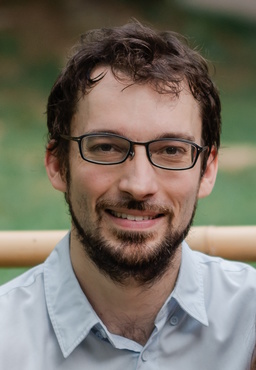
Dr Guillaume A Sartoretti
Assistant Professor, Control and Mechatronics
Mechanical Engineering Department
National University of Singapore
Dr Guillaume Sartoretti joined the Mechanical Engineering Department at the National University of Singapore (NUS) as an Assistant Professor in 2019, where he founded the Multi-Agent Robotic Motion (MARMot) lab. Before that, he was a Postdoctoral Fellow in the Robotics Institute at Carnegie Mellon University (USA), where he worked with Prof. Howie Choset. He received his Ph.D. in robotics from EPFL (Switzerland) in 2016 for his dissertation on “Control of Agent Swarms in Random Environments,” under the supervision of Prof. Max-Olivier Hongler. His passion and research lie in understanding and eliciting emergent coordination/cooperation in large multi-agent systems, by identifying what information and mechanisms can help agents reason about their individual role/contribution to each other and to the team. Guillaume was a Manufacturing Futures Initiative (MFI) postdoctoral fellow at CMU in 2018-2019, was awarded an Amazon Research Awards in 2022, as well as an Outstanding Early Career Award from NUS’ College of Design and Engineering in 2023. His group’s work received best paper awards at DARS in 2021, 2022, and two best paper awards at ICRA 2025.
Details
- 25 Mar 2026, 12:00 pm - 1:00 pm
- 1 hour
- NUS, Blk EA, #02-11
Status
This event is now closed.